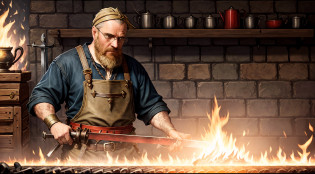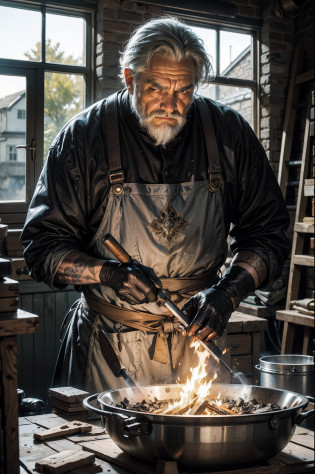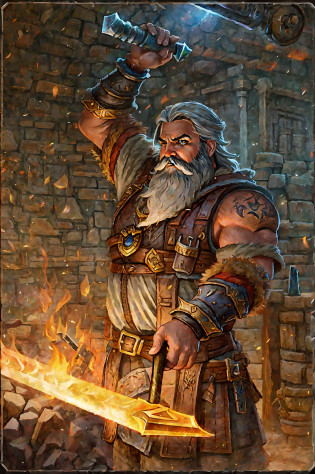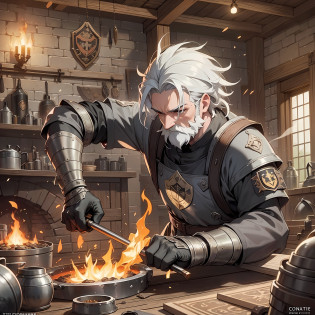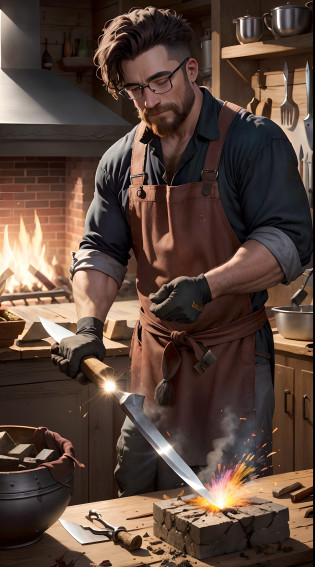



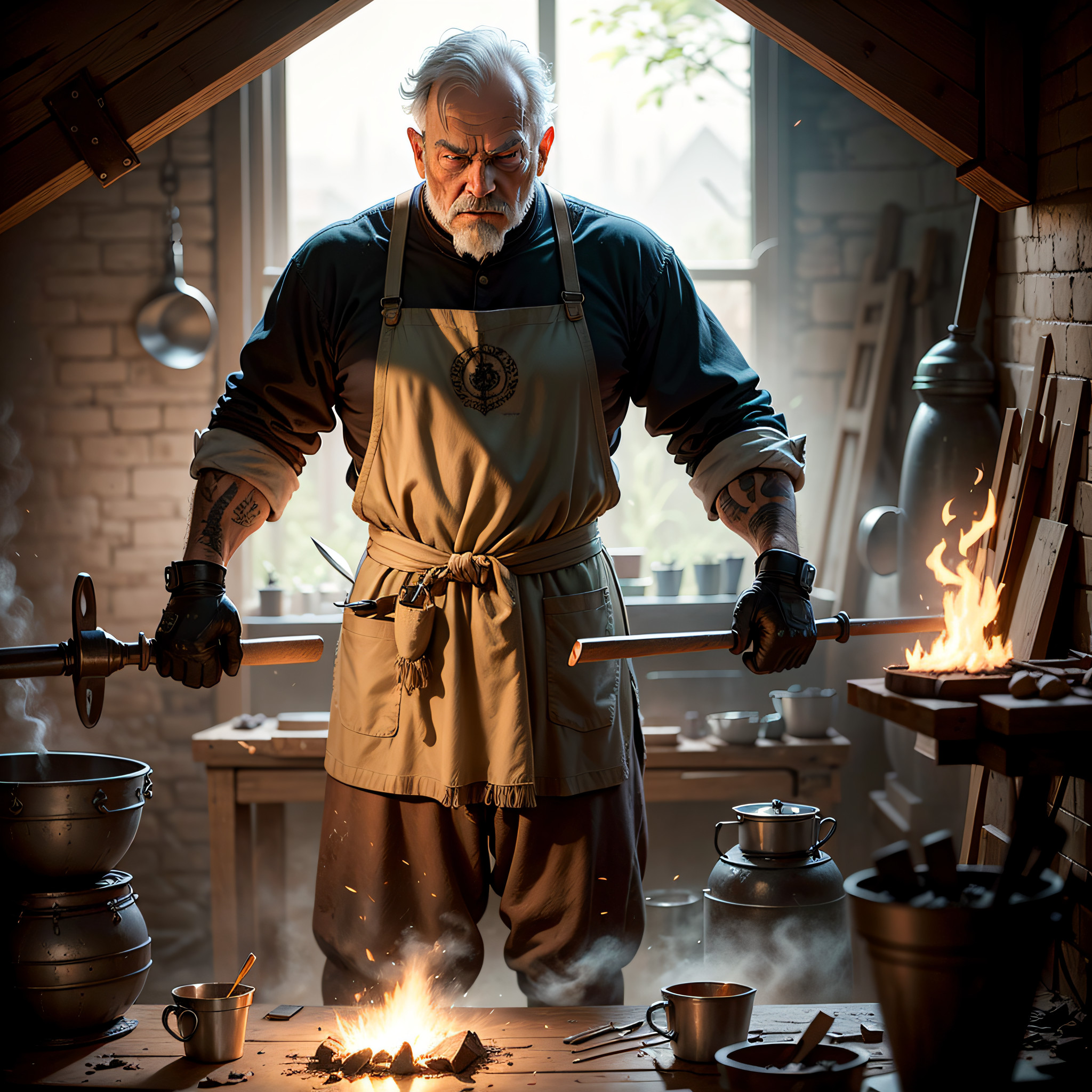
A man in an apron holding a sword over a fire
The old blacksmith is a wrinkled and stout looking man, whose face is marked by time and hard work. His gray hair is matted and his thick mustache, covered in soot, gives an even more imposing appearance. His calloused and strong hands bear witness to the years of effort devoted to the art of blacksmithing. Dressed in a battered linen tunic, covered in charcoal stains, and a worn leather apron, the old blacksmith looks like an ancestral figure, connected to the past and the secrets of the forge. On his face, the expression of serenity and wisdom contrasts with the intensity of his gaze, which shows the concentration and passion he has for his craft. In the medieval forge, flames dance around the furnace, illuminating the environment and casting shadows on the stone walls. The glowing iron glows under the hammer of the blacksmith, who, with precise movements, shapes and transforms the metal into functional works of art. The embers fly through the air, while the smell of hot metal and the rhythmic sound of the hammer on the anvil fill the air. Around the forge, working instruments of different sizes and shapes are arranged, revealing the expertise and experience of the blacksmith. Iron tweezers, sledgehammers, carvers and files are a testament to the variety of techniques and skills he has mastered over the years. Despite his advanced age, the old blacksmith is still active and attracts apprentices and curious people who seek to learn from his dexterity and tradition. He is respected for his expertise and the magnitude of the works he creates, from swords and armor to practical utensils for everyday life. The old blacksmith is an emblematic figure of the medieval forge, a guardian of ancestral knowledge and the history of the art of blacksmithing. Their presence in the forge is a reminder that even in modern times, tradition and passion for the craft can survive and inspire future generations. --auto