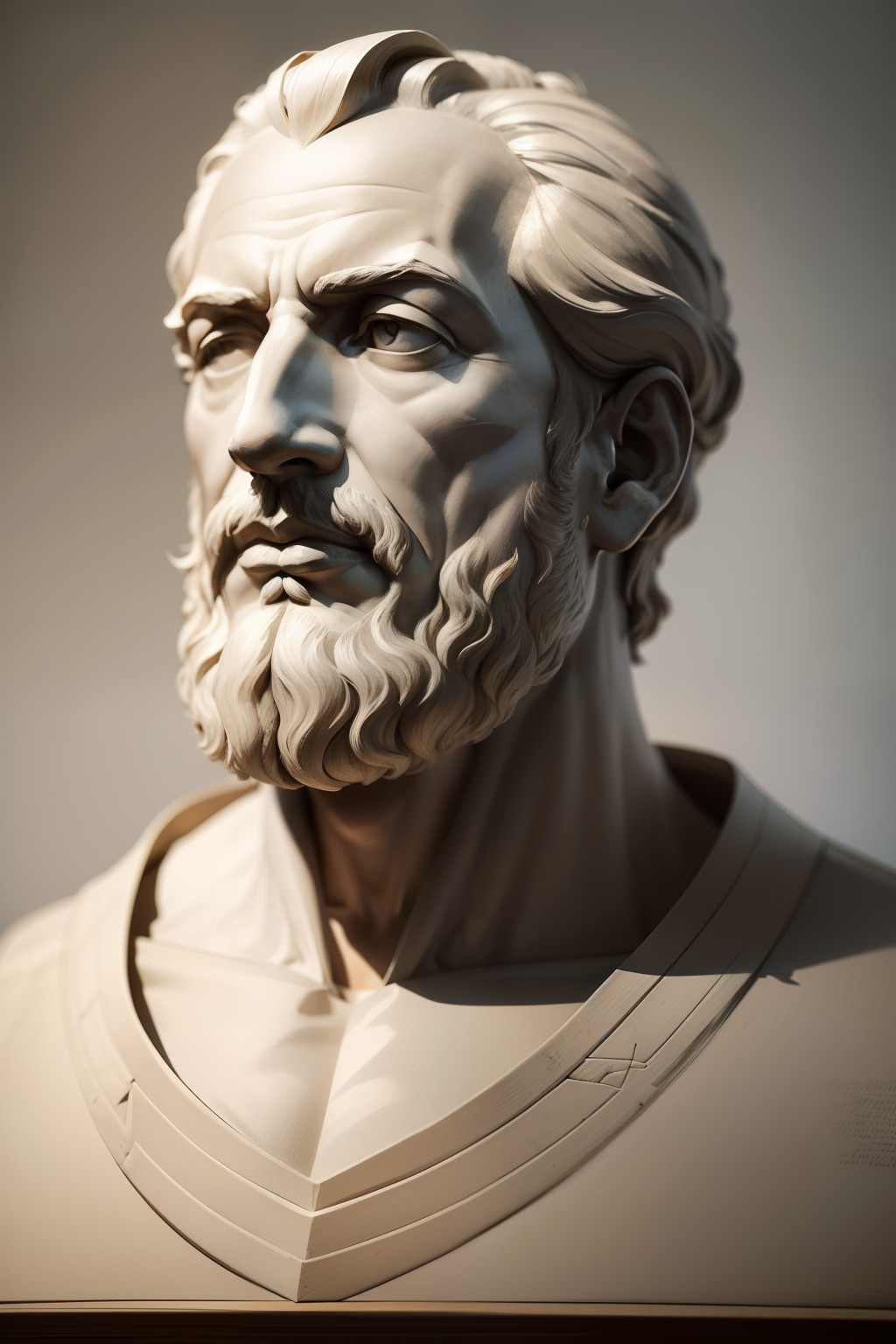
Thucydides, an influential ancient Greek historian and author, is best known for his seminal work "History of the Peloponnesian War." Born around 460 BCE, his historical accounts provide profound insights into the political and military dynamics of ancient Greece. Despite the absence of contemporary visual representations, Thucydides' intellectual legacy has left an indelible mark on the understanding of international relations. In his work, Thucydides dissected the causes and consequences of the Peloponnesian War between Athens and Sparta. His meticulous analyses of power politics, the complexities of human nature, and the dynamics of conflict have reverberated through centuries of scholarship. Though depictions of Thucydides remain speculative, it is his intellectual contributions that define his legacy. He pioneered the documentation of historical events with rigorous accuracy, shaping the methodology of historical inquiry. His emphasis on understanding the motivations of political actors, coupled with his exploration of the "security dilemma" and realist principles, laid the groundwork for modern international relations theory. Thucydides' writings illuminate the enduring patterns of international conflict and diplomacy, and his concepts continue to resonate in contemporary discussions of global affairs. Despite the absence of his physical likeness, his profound influence on the study of history and international relations remains ever-present, inspiring generations to explore the complexities of human interactions on the world stage.